Saturday, February 21, 2009

Women in women's magazines


The condition of women's magazines today is such that it has become a subject of satire. What was known for its inspirational stories for women, are now known only for glitz and glamour. This video is just an introduction to women's magazines today. In this journal I will discuss various aspects of women's magazines that are derogatory to women, along the lines of three key issues raised by Gauntlett in this regard.


QUESTIONS HAPPINESS

Some women’s magazines “encourage you to question your life and your happiness and tell you what you ought to be doing or feeling”. (pg.212)
Today, magazines are bolder, more revolutionary. It would not be difficult to start believing in their prescriptive manner especially when they claim to be the only truth. There is absolutely no doubt that they draw people into a world of make believe, enticing them to a life largely disconnected from reality. I strongly feel that they compel people into believing their way as the only perfect and right way. A written word after all has the capacity to shake the foundations of one’s own beliefs.


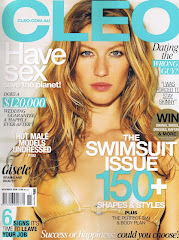
Take for example this magazine cover which says “get the body you were born to have.”


Who decides what kind of body one was meant to be born with, or what is a perfect body? Not only does it create self-doubt but also makes them uncomfortable about themselves. Setting unreasonable standards, usually not based on any scientific research, creates undue pressure on the reader. Moreover, is it only about beauty and looking good? Magazines carry very strong contradictory messages and often leave the readers wondering.

Closer scrutiny of this particular magazine is a case in point.
It reads, ”be the woman God wants you to be,” giving a very positive assurance to women that the perfect and only way is the natural way, dissuading them from playing around with their bodies.


Ironically the cover unashamedly imposes screaming headlines; ‘detox diet’, ‘lose weight’, ‘get glowing skin’, ‘find your new look’; confusing the readers further. They probably reinforce that probably god wants one to be like the sexy cover girl.


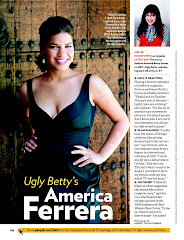
What can be a starker example of the confusing messages than this cover with America Ferrera “Ugly Betty” now not so ugly, rather super hot! When the show was first premiered it immediately caught the attention of the public, breaking many myths and fallacies, and set in motion strong beliefs that beauty lay within.


Now suddenly being bombarded with this airbrushed and morphed photo of a diva like “Ugly Betty,” left many shocked and wondering what to believe.


CONTRADICTIONS

My main objections remain with the contradictory messages that magazines carry. There is nothing objectionable about motivating people to take care of their bodies and look good which in fact, can go along way in improving a person’s self-image. However, one wonders if eulogizing womanhood, is giving them the power and courage to stand up and assert themselves, or is it simply about “if men can, so can we?” The intention is questionable. By propagating prototypes of the perfect women with a perfect body, they send very contrasting messages.


Having said that, I am also not comfortable with the belief that, “women’s magazines are, of course, all about the social construction of womanhood today” (pg.196).
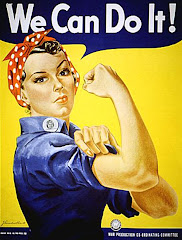
In my opinion, women magazines are more about “social destruction” of womanhood today. Overriding commercial interests and focusing too much on issues that are not even skin deep or important, harms womanhood beyond repair. They encourage misplaced values through stories of "how to make him groan", and shapely figures over healthy bodies. Women give into anorexia and at times, even obesity when the depression of failing to match their idols grips them. Reams of glossy paper highlighting lives of glamour dolls, top models, or just rich and spoilt heiresses like Paris Hilton, do very little to rebuild any positive image of women. Where are the inspiring stories of women like Dorothy Hodgkin, Rosa Parks, Eva Peron, Betty Naomi Freidan, Anne Frank, Billie Jean King, Mother Teresa or the more contemporary women Aung San Suu Kyi, Mia Farrow, Indra Nooyi and the endless list of women whose lives can lend a new meaning to living ?


MEN AS SEX OBJECTS

This brings me to my last contention regarding magazines for women. "Women were objectified for decades in men's media, advertising and pornography. But nowadays several women's magazines objectify men using the same kind of language and imagery as the men's magazines- and at times, even in ways which some of the men's magazines might be embarrassed about." (pg. 196)
It is remarkable and courageous for them to bring the woman out of the closet, especially after years of suppression and struggle. They are now increasingly being considered a human in flesh and blood with her own needs, desires and dreams. With women being more expressive and assertive, they refuse to be just pretty dolls to be ogled at. Rather they are no longer shy of appreciating the male body.
Appreciation of the other in that sense is an assertion of gender equality. Women magazines are becoming increasingly open, which is a good sign. However, in an attempt to be liberal and in using men as sex objects, women have continued to remain sex objects themselves.

History stands testimony to the appreciation and exaltation of the human body.
The country I come from has long traditions of literature, dance forms, music, sculpture, paintings eulogizing sex and sexuality.
Kama sutra, temples at Khajuraho and Konark bear testimony to the fact that sex and sexuality are not taboo but something to be celebrated. Thus, in my opinion, there is nothing wrong with the appreciation of the opposite sex but obsessively talking about how to entice your man or titillating the senses makes such magazines extremely restrictive. Anything bordering on pornography is just not acceptable.

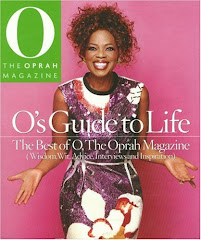
In this scenario, it is heartening to know of some very positive women’s magazines like
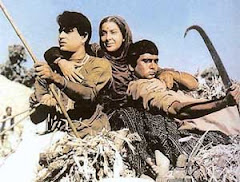
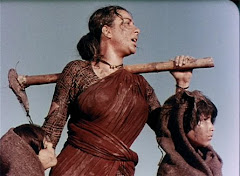
"O" and "Good Housekeeping". It would be interesting to see how many other magazines actually go beyond the heady cocktail of fashion, food and entertainment into something more meaningful and sensitive to make this world a better place. How many actually report the unhealthy sex ratio, female infanticide, illiteracy amongst women or domestic violence? Were they to report the women in the third world countries who work tirelessly in the fields despite their five to six children and show resilience to carry on in a world largely dominated by men, the respect for such magazines would increase manifold.


Wednesday, January 28, 2009

Representation of gender and the 'other' today


The intrinsic relationship between media and society cannot be undermined. In fact such is the impact of the media that we often find ourselves questioning on whether it is the media that dictates our lives, or the other way round. A point of discussion is the way media which otself has undergone a sea change, projects gender today. It does not fight shy of bringing out of the closet topics which were taboo so far, be it sexuality, sexual preferences, alternative thoughts in art forms, idea of beauty and much more. Films, literature, music, art , television are more willing to talk about the other as is evident from the music by Melissa Etheridge, reality shows such as “Queer eye for the straight guy,’ films like ‘Brokeback mountain’ and ‘Philadelphia.’


Media reflective of the society is showing signs of opening up. Individuals and groups are increasingly coming into their own, discovering and accepting themselves. It is in this context that we are witnessing a shift in gender issues where masculinity and feminism are becoming increasingly blurred and nebulous. Evidences of such shifts are seen in the way that pinks and purples, conventionally colors of feminism are increasingly and unabashedly, being accepted by men.


Similarly, there is a very thin dividing line between the roles of women and men when people like Hillary Clinton are ready to take on any male for the top job. Her critics however are ready to comment on her rather male attire and masculine behavior.


The increasing assertion of gender equality by women, and metro sexual males no longer shying away from indulging themselves at spas and beauty parlors, are comments on the flux in society’s culture.


It is a reflection of a society in transition, trying to break away from the traditional prototypes, and yet showing courage to do so.


This is best reflected in the video that I have chosen of the song ‘Beautiful,’ by Christina Aguilera which is path breaking and very revolutionary, and yet a reflection of sorts of the underlying turmoil of society. The lyrics are strong and powerful.
The video begins with her saying “ don’t look at me’ followed by scenes of her singing alone in a room with her focusing on her poor self-image interspersed with sequences of other people projecting the images of their bodies. The visuals of an underfed girl loathing her body, followed an emaciated man lifting weights surrounded by pictures of body builders, a girl going through pages of women magazine and then throwing it in a fire, and then shifting to a gay couple oblivious of the world and a transvestite, throw up many issues amidst the hurt and pain that the singer is going through. It’s a sad commentary of one’s insecurities, low self-esteem and confusion of one’s sexuality. At another level, this video is also a brave attempt at breaking away from the mold and the stereotypes and pushes viewers beyond the “no entry’ zone, people would not dare to see otherwise. The song ironically named ‘beautiful’ is also about hope, about accepting oneself despite the society. ‘Words won’t bring me down.’ strangely give courage. There is admittance that the process is painful and uncertain. Though in this case, it is depicted through sexuality it has wider implications to life itself.


MEDIA POWER VS. PEOPLE POWER

It is difficult to accept that “culture is a living active process: it can be developed only from within, it cannot be imposed from without or above.” (p.28)
When we are bombarded with the same stereotypical images day in and day out, like media’s obsession with “how to get a man in bed’ (Cosmopolitan magazine), beauty tips, and more recently, the fashion barons obsession with maternity dresses after Angelina Jolie made pregnancy hip , it would be natural for us to come under its attack. A song like this became a trendsetter for many to actually discuss such issues. Needless to say the impact of a written word or a song or a picture especially if it is linked to a celebrity will remain with us and over time become a part of our thinking process.

I fully agree with Adorno’s view that “the power of culture industry’s ideology is such that conformity has replaced consciousness” (p.25).
There are times when one trend is replaced by another just by the sheer attention that media has placed on it. It’s trendy therefore, now to cover gay parades even in a conservative country like India. But then it does not imply that media power is overwhelming and has the capacity to overrule people power. Covering gay parades, talking about gay rights, being open about gay events, has not necessarily made the same sex marriages and relationships acceptable to the Indian society. It continues to be a taboo for most and though some weak efforts are being made to accept individual’s right of choice, it has not translated into an acceptance by society or legislators in most parts of the world. It is here that I strongly feel that though the media has a tremendous power to influence and bring in overriding changes, people’s opinion also has the capacity to influence. The relationship between the two is more of mutuality and can work both or either way.
Thus though a video such as this would have the capacity to make people think of their own identities and sexuality would have a limited impact and would not necessarily shake up every viewer.


SELLING BEAUTY

‘Every woman knows that, regardless of her achievements, she if a failure if she is not beautiful’ (p.85).
The impact of media on women is seen in their obsession to be thin, not necessarily because they want to but because that is what is in. Similarly, stereotypes promoted by media puts men and boys under tremendous pressure to prove their masculinity, to prove that they are’ real men.’ In my opinion this song is an answer to comments like the above. It emphasizes that you are beautiful the way you are and you need not try to be someone else to look beautiful. ‘You are beautiful, no matter what they say, words can’t bring you down...’

MEDIA EFFECT STUDIES
‘Media ‘effects’ studies – by which we mean those studies which seek to identify a particular ‘effect’ which is the result of exposure to a particular type of media content- have had a most unusual history. The majority of this research has been centered, predictably enough, on the question whether watching violence on screen will lead individuals to be aggressive in real life’ (p.32).
In my opinion it is not only violence in media that effects individuals but also the stereotypical roles and representation of males and females that form a strict image in the minds of people. It is mainly due to the influence of media that the society starts following certain trends be it a hairstyle, the way one talks, walks, present oneself, understand other people and so forth.
A powerful video such as this reinforces the belief that media does have an everlasting impact on its audience. This song (audio) for instance conjures up images of a perfectly chiseled body being romanced by a strong man up a garden path. This would be a normal reaction of anyone who has grown up being pumped with a certain gender specific image of men as epitome of muscular power and women as delicate beings meant to be to be nurtured. Media in large measure promotes these stereotypical images of beauty hinging on perfection. To a viewer the obsession with a perfect body, in this case, the man trying to build his body, and the woman rejecting her own thin look, is going to be considered normal. The powerful imagery reinforces certain ideals like a perfect figure or perfect relationships while questioning them. It also throws up the issues of interchangeable roles of men and women apparently no longer fixed and rigid, and about freedom of choice.


GENDER IDENTITY


The three psychological theories that shape gender identity are biological determinism, social learning and cognitive development. In my opinion social learning process and cognitive development of a child can be largely influenced and controlled by media because media shows images and reinforces it by showing them over and over again. On the other hand, biological aspects that shape gender identity and sexual orientation remain largely natural.
This song particularly has the capacity to promote social progress by taking the understanding of gays, lesbians, heterosexual and transvestites and encourage acceptance and tolerance of those who are different to a higher level. Such a song can cause more people to identify with those who are not “normal” and engage in understanding their behaviors. It may help one in ascertaining one’s own sexual orientation and identity. I feel that had the media given equal mainstream attention to the work for gays and lesbians over the years, the society today would have been more tolerant. By touching upon the thin dividing line between masculinity and feminism, the confusion thereof, it is about identity. The video urges one into rebellion and not being afraid of wanting to break free. There is a lurking uncertainty because being the other, is largely unacceptable.
It urges that it’s okay to be oneself and stand by one’s convictions. It’s a commentary on individuality versus societal norms, of struggle and underlying hope. I feel that when media wields tremendous power in shaping opinions and perceptions it does so in the way it shapes and reflects gender roles and stereotypes.Christina’s assertion that words won’t let me down, is a fight to be oneself irrespective of what the world thinks. This could be a source of tremendous courage to stand up for oneself however, unconventional and off the track, it maybe.


In my opinion,by repeatedly exposing people to unconventional mores, lifestyles and beliefs, media has the capacity to make them more acceptable to people over time. A video such as this would raise pertinent questions about perceptions of beauty of sexuality and gender roles which would otherwise be, brushed under the carpet. This would also have the capacity to resolve conflicts in the minds of the individuals..